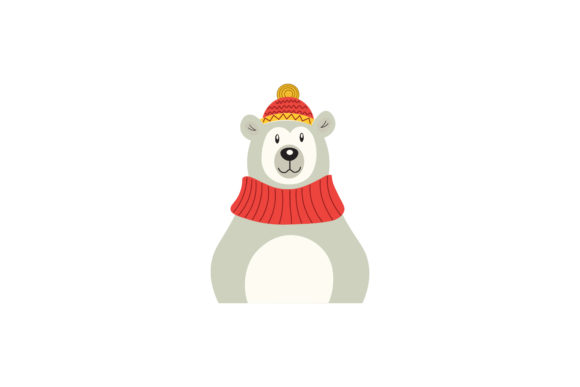
Christmas Character Polar Bear Vector Review
First Impressions: Holiday Charm Meets Vector Precision
When evaluating digital assets for embroidery, the transition from screen to stitch is where many designs fail. As a designer who regularly prepares files for both commercial clients and personal craft projects, I approach every new graphic with a critical eye toward stitchability. My first impression of the Christmas Character Polar Bear Vector was overwhelmingly positive regarding its structural integrity. Unlike raster images that often require tedious tracing and cleanup, this vector-based illustration offers clean, mathematical paths that translate beautifully into digitizing software.
The mood of this design strikes a delicate balance between whimsical and professional. It avoids the overly cartoonish aesthetic that can sometimes cheapen a handmade product, leaning instead into a classic holiday illustration style. For an embroidery designer, the distinct separation of shapes suggests excellent potential for color blocking. Whether you intend to use it as a traditional fill stitch design or adapt it into an applique design, the underlying geometry supports both methods without requiring extensive redrawing. The visual personality feels warm and nostalgic, making it an immediate candidate for high-value holiday merchandise rather than just novelty items.
Real-World Application: Stitching the Bear on Fleece Sweatshirts
To truly understand the value of this asset, I mentally walked through a recent client request: a batch of custom holiday sweatshirts for a local boutique. This is a common scenario for Etsy sellers and small shop owners during the Q4 rush. The Christmas Character Polar Bear Vector proved ideal for this specific application because of its scalable nature. Since the source files include AI, EPS, and SVG formats, I could resize the bear to fit a 5x7 hoop for adult sweatshirt embroidery or scale it down to a 3x3 hoop size for baby embroidery without losing edge definition.
In this real-life scenario, the design’s clarity becomes its greatest asset. When working with fleece or French terry fabrics, fine details often get lost in the pile. However, the bold lines and purposeful negative space in this polar bear graphic allow for adequate stitch density without causing fabric distortion. I envision using a combination of satin stitch borders to define the character's outline and lighter fill stitches for the interior. This approach keeps the garment soft and wearable, which is crucial for customer satisfaction. A stiff, bulletproof embroidery patch might work for denim, but for cozy holiday apparel, the design must breathe. This vector facilitates that necessary flexibility in digitizing.
Navigating Fabric Textures and Hoop Size Limitations
While the Christmas Character Polar Bear Vector is versatile, practical experience dictates that not all substrates are created equal. If you are planning to use this for tea towels or kitchen linens, the design performs exceptionally well due to the tight weave of those fabrics. However, caution is required when applying this to highly textured surfaces like chunky knits or plush blankets. In those cases, the intricate details of the bear’s face or accessories may need simplification during the digitizing process to prevent the stitches from sinking into the fabric texture.
Hoop size management is another critical consideration. Although the canvas size is provided at 1920 px X 1280 px, remember that pixel dimensions do not equate to physical stitch measurements. Always verify your machine’s maximum field size before finalizing your layout. For smaller hoops, such as those used for cap embroidery or shirt cuffs, you may need to isolate specific elements of the bear rather than using the full composition. Tiny lettering or minute decorative accents included in the original illustration might need to be removed or enlarged to ensure they stitch out clearly. Running stitch details thinner than 1mm often disappear on dark fabrics or stretchy materials, so testing on scrap fabric is non-negotiable.
Elevating Product Value and Brand Consistency
For creative entrepreneurs and makers, the quality of your design assets directly correlates to perceived product value. Using a crisp, professional vector like this Christmas Character Polar Bear Vector signals to buyers that you care about the details. In the competitive landscape of Etsy listings and craft fair booths, blurry or jagged embroidery stands out for the wrong reasons. This graphic provides the foundation for sharp, clean stitching that builds customer trust and encourages repeat business.
Beyond the physical product, these graphics serve as powerful marketing tools. The inclusion of JPG and PNG formats alongside the vector files allows for seamless creation of printable mockups and digital product previews. Before I even thread my needle, I can place the high-resolution PNG onto a digital sweatshirt template to show clients exactly what the finished product will look like. This capability streamlines the approval process for custom apparel orders and helps secure sales faster. For those selling digital embroidery files, providing multiple formats ensures compatibility across various software platforms, increasing the commercial viability of your own design assets.
Essential Designer Notes for Successful Execution
Before loading this design into your machine or listing it in your shop, adhere to these practical guidelines derived from years of embroidery production:
- Test Stitch on Target Fabric: Never assume a design will work perfectly based on screen appearance. Always run a test sew-out on the exact fabric and stabilizer combination you plan to use for the final project. This reveals issues with stitch density or registration that software cannot predict.
- Verify Licensing Terms: While the file formats are comprehensive, always confirm the specific license agreement regarding commercial use. Ensure you have the right to sell finished products or modified digital files before investing time in production.
- Optimize Thread Colors: Review the color palette against your available thread inventory. High-contrast thread colors against the fabric background improve visibility. If stitching on dark fabric, consider adding a white underlay base to make the polar bear pop.
- Check Stabilizer Requirements: The weight of the design matters. If you convert this vector into a dense fill stitch design, use a heavier cut-away stabilizer for stretchy fabrics to prevent puckering. For woven fabrics like tote bags, a medium tear-away may suffice.
- Edit Responsibly: The guarantee that this design is easy to edit is a major advantage, but edit with intent. Simplifying complex areas for small hoop sizes preserves the integrity of the character. Avoid stretching the design disproportionately, as this distorts stitch angles and affects coverage.
- Mockup in Black and White: Test your digital previews in grayscale to ensure the design has enough tonal contrast to be recognizable without color. This is vital for accessibility and for customers viewing listings on monochrome e-readers or low-brightness screens.
Final Thoughts for Makers and Sellers
The Christmas Character Polar Bear Vector represents a solid investment for anyone serious about holiday embroidery. Its strength lies in its clean vector construction, which removes the technical barriers often associated with converting illustrations into machine embroidery designs. Whether you are creating personalized gifts for family, stocking your Etsy shop with seasonal bestsellers, or fulfilling commercial branding orders, this graphic provides the reliable foundation needed for professional results. By respecting the relationship between digital art and physical thread, and by following proper testing protocols, you can transform this charming polar bear into a profitable and beloved staple of your holiday collection.