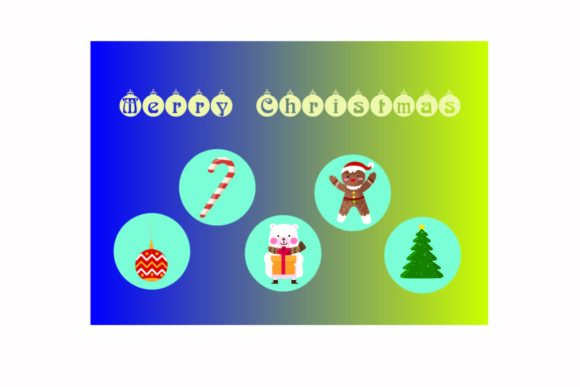
Christmas Character Illustration: An Embroidery Review
As a professional embroidery designer and product reviewer, I approach every new graphic asset with a specific question: will this actually stitch out well on a finished product? When evaluating the Christmas Character Illustration, my focus shifts immediately from screen aesthetics to practical application. This is not merely a digital art file; for us in the craft business and apparel decoration space, it is a blueprint for thread. The vector format provides a distinct advantage here. Because these files are openable, editable, and resizable without losing quality, they offer a level of flexibility that raster images simply cannot match for embroidery digitizing. Having access to both AI 10 and EPS 10 formats means I can manipulate anchor points and simplify complex curves before I ever assign a single stitch type.
First Impressions and Visual Personality
Upon opening the vector file in Adobe Illustrator, the first thing I assess is the line clarity and shape definition. A successful machine embroidery design relies on clean, closed paths. This Christmas Character Illustration presents a cohesive mood that feels festive yet structured. The visual personality strikes a balance between whimsical and professional, making it suitable for both children’s items and adult holiday apparel. Unlike generic clip art, the lines here appear intentional, suggesting that when converted to satin stitch or fill stitch areas, the design will maintain its integrity. For an Etsy seller or boutique owner, this matters because customers associate crisp, well-defined embroidery with high-quality handmade products. The illustration avoids overly chaotic details that often cause puckering or registration issues during the stitching process.
Real-World Application: Stitching a Holiday Sweatshirt
To truly judge this asset, I mentally placed it into a real-life scenario: creating a custom embroidered sweatshirt for a small shop merchandise drop. Sweatshirts are a staple for holiday embroidery, but the fleece texture can be unforgiving. With this Christmas Character Illustration, the vector scalability allows me to adjust the size specifically for a left-chest placement or a larger center-back design without pixelation. In this context, I would likely convert the primary outlines to a running stitch for definition while using fill stitches for solid color blocks. The clean geometry of the vector art suggests it would also work beautifully as an applique design. By using the vector shapes as cutting templates, I could reduce the overall stitch density, resulting in a softer hand-feel on the garment—a critical selling point for custom apparel buyers who value comfort alongside aesthetics.
Versatility Across Products and Substrates
Beyond sweatshirts, this graphic shows strong potential for various holiday projects. For a tote bag design, the bold lines would remain visible even on natural canvas textures. If adapting for baby embroidery, such as bibs or onesies, the ability to resize the EPS file ensures delicate details aren't lost at smaller scales. However, versatility requires caution. While the illustration is excellent for flat surfaces like pillow covers and tea towels, applying it to curved surfaces like caps requires careful editing. The original vector proportions might need slight horizontal stretching to compensate for the curve of a hat frame. Similarly, for an embroidered patch intended for denim jackets, I would verify that the internal details are large enough to survive the merrowing edge process. Small text or tiny facial features within the character may need to be simplified to prevent needle breaks or thread bunching on dense fabrics.
Critical Considerations for Fabric and Stabilizer
No matter how perfect the digital embroidery file appears, fabric texture dictates the final outcome. When planning to use this Christmas Character Illustration on stretchy knits or performance wear, proper stabilizer selection is non-negotiable. The vector precision helps, but if the underlying fabric shifts, those crisp lines will distort. I always recommend testing on scrap fabric first, especially when working with dark fabrics where thread color contrast is paramount. Light thread on dark material can sometimes look sparse if the stitch density isn't adjusted. Conversely, heavy fill stitches on thin cotton can cause tearing. As a maker, you must evaluate whether the design’s current complexity matches your target substrate. For commercial embroidery projects involving frequent washing, such as kitchen towels or aprons, ensure all elements are securely connected to prevent unraveling over time.
Impact on Brand Consistency and Customer Trust
For creative entrepreneurs and digital product sellers, consistency builds trust. Using high-quality vector illustrations like this one elevates the perceived value of your finished product. When customers see sharp, professional stitching rather than jagged edges or uneven spacing, they recognize the craftsmanship. This directly influences buyer engagement and repeat sales. Furthermore, having editable source files allows for brand customization. You can tweak colors to match your shop’s palette or modify elements to create exclusive personalized gifts. This adaptability transforms a standard graphic into a unique design asset that distinguishes your handmade business from mass-produced alternatives. Whether you are selling physical goods or printable mockups for digital previews, the foundation of quality starts with superior source art.
Designer Notes for Successful Implementation
Before adding this Christmas Character Illustration to your next collection, consider these practical steps to ensure success:
- Verify Licensing: Always confirm whether your purchase includes rights for commercial embroidery or just personal use before listing finished products for sale.
- Simplify for Scale: If resizing down for baby clothes or sleeve cuffs, manually remove tiny nodes in the vector file to prevent stitch clutter.
- Mockup Testing: Create black and white mockups to test contrast. If the design relies solely on color differentiation without outline separation, it may fail on monochromatic garments.
- Density Check: Review stitch density settings after digitizing. Vector art looks weightless on screen, but thread has physical mass. Adjust underlay stitches based on fabric stability.
- Thread Color Planning: Map out thread colors before hooping. Complex illustrations may require more color changes than anticipated; streamlining the palette can improve production efficiency for small business owners.
- File Compatibility: Ensure your digitizing software imports AI 10 or EPS 10 files correctly. Older versions may require conversion.
Final Thoughts on Value and Usability
The Christmas Character Illustration stands out as a robust starting point for holiday collections. Its vector nature respects the technical demands of embroidery while offering the creative freedom necessary for custom apparel and personalized gifts. It bridges the gap between digital art and tangible craft. For the experienced embroiderer, it provides a reliable skeleton for digitizing. For the newer maker, it offers a professional aesthetic that avoids common beginner pitfalls associated with poorly sourced graphics. Ultimately, the value lies not just in the download, but in how thoughtfully you translate those vectors into thread. By respecting fabric limitations, testing rigorously, and leveraging the editability of the file, you can transform this illustration into a best-selling holiday product that delights customers and strengthens your brand reputation.